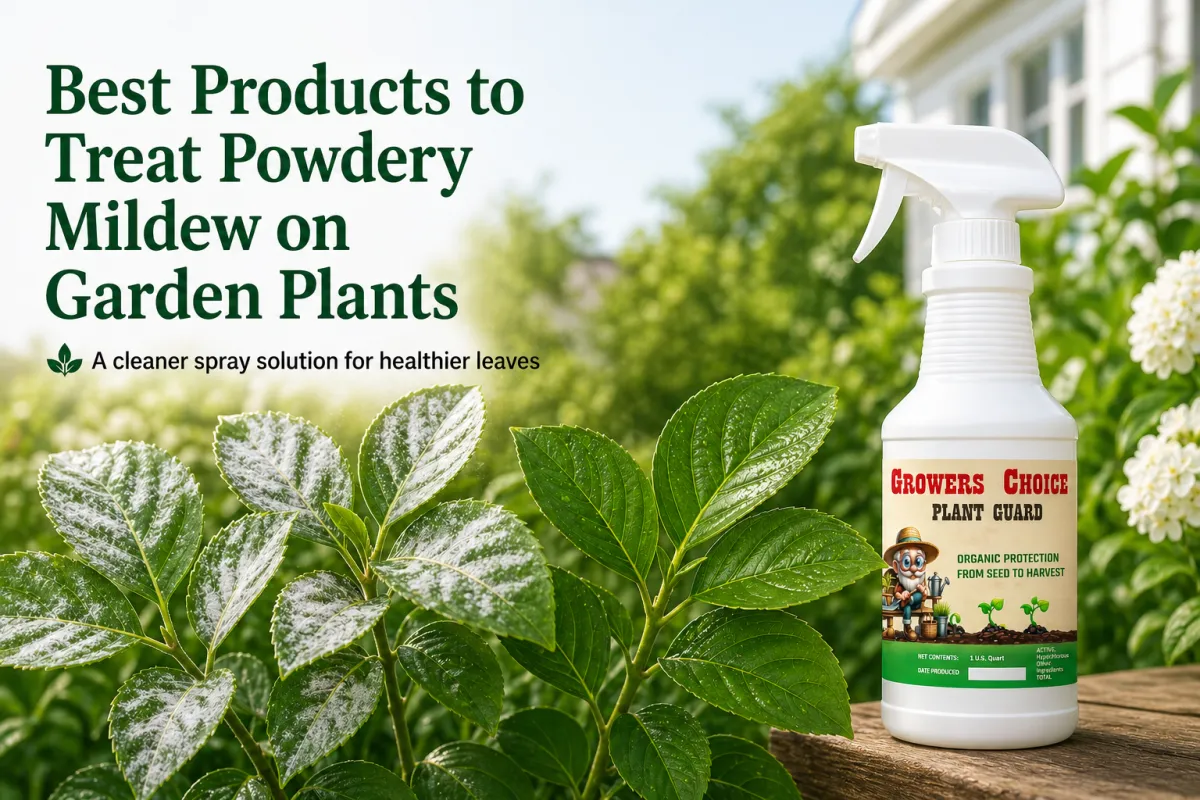
Best Products to Treat Powdery Mildew on Garden Plants
Best Products to Treat Powdery Mildew on Garden Plants
Powdery mildew is one of the most common garden problems—and one of the most annoying.
Your plants can look healthy one day, then suddenly the leaves are covered with a white, dusty coating that looks like someone shook a bag of flour over your garden.
The good news?
Powdery mildew can often be managed when you catch it early and use the right product as part of a simple plant care routine.
The better news?
You do not need to turn your backyard into a chemical warfare zone to do it.
In this guide, we’ll look at some of the most common products used to treat powdery mildew on garden plants—and why Growers Choice Plant Guard 420 is a smart option for gardeners who want a cleaner, easier spray for everyday plant care.
What Is Powdery Mildew?
Powdery mildew is a fungal disease that appears as white or gray powder on plant leaves, stems, flowers, and buds.
It can affect many garden plants, including:
Roses
Cucumbers
Squash
Zucchini
Tomatoes
Peppers
Pumpkins
Grapes
Cannabis/hemp plants
Ornamentals
Houseplants
Powdery mildew usually starts small. You may see a few white spots on the leaves. But if the conditions are right, it can spread quickly.
Left untreated, powdery mildew can:
Weaken plant growth
Reduce flowering
Lower fruit and vegetable quality
Cause leaves to yellow or curl
Slow plant development
Make plants more vulnerable to stress
In plain English: powdery mildew steals energy from the plant.
And plants need that energy to grow, bloom, fruit, and fight off other problems.
Why Powdery Mildew Shows Up in the Garden
Powdery mildew loves certain conditions.
It often appears when plants are crowded, airflow is poor, humidity is high, and leaves stay damp or stressed.
Common causes include:
Poor air circulation
Overcrowded plants
Warm days and cool nights
High humidity
Too much shade
Plant stress
Inconsistent watering
Weak plant hygiene
Infected plant debris left in the garden
Here’s the part most gardeners miss:
Powdery mildew is not just a “spray problem.”
It is a plant environment problem.
That means the best results usually come from combining the right spray with better airflow, cleaner growing areas, and regular plant care.
Best Products to Treat Powdery Mildew on Garden Plants
There are several product types gardeners commonly use for powdery mildew. Some are stronger. Some are gentler. Some are better for prevention. Some are better once mildew is already visible.
Let’s keep this simple.
1. Growers Choice Plant Guard 420
Best for: Gardeners who want a cleaner, easy-to-use plant spray for routine plant care and powdery mildew management.
Growers Choice Plant Guard 420 is a specialized formulated potassium HOCl product designed to support cleaner plant surfaces and better plant hygiene.
For gardeners dealing with powdery mildew, this matters because powdery mildew often shows up on the surface of leaves, stems, and new growth.
Plant Guard 420 can be used as part of a regular care routine to help clean plant surfaces where mildew, microbial pressure, and unwanted plant issues may appear.
Why Gardeners Like This Option
Growers Choice Plant Guard 420 is a good fit for people who want:
A simple spray-and-go product
No complicated mixing
No harsh chemical residue
A cleaner approach to plant care
A product that fits into prevention and maintenance routines
Something useful for more than one plant problem
Some garden products feel like you need a lab coat, goggles, and a minor in chemistry.
Plant Guard 420 is more straightforward.
Spray the plant surface. Support cleaner leaves and stems. Keep your plants looking healthier.
That’s the kind of garden math we like.
2. Neem Oil
Best for: Gardeners who want a traditional plant-based option.
Neem oil is commonly used in gardening for fungal and pest issues. It can help with powdery mildew when used correctly, especially in early stages.
However, neem oil can sometimes stress sensitive plants if applied during hot weather or direct sunlight. It may also leave an oily coating and has a strong smell some people do not love.
Pros
Popular natural garden product
Can help with some fungal and insect issues
Widely available online and in garden centers
Cons
Can burn leaves if used in heat or sun
Strong odor
Oily residue
Must be mixed and applied carefully
Neem oil can work, but timing matters. Spray at the wrong time and your plant may look at you like, “Was this supposed to help?”
3. Potassium Bicarbonate Sprays
Best for: Active powdery mildew outbreaks.
Potassium bicarbonate is often used for powdery mildew because it changes the leaf surface environment and can help disrupt fungal growth.
It is commonly found in commercial garden fungicide products.
Pros
Commonly used for powdery mildew
Can work on visible mildew
Often considered a lower-toxicity option
Cons
Must be mixed correctly
Can leave residue
May need repeated applications
Not always ideal for every plant type
Potassium bicarbonate sprays are a popular choice, but they still require careful use and repeated application.
4. Sulfur-Based Fungicides
Best for: Traditional fungal disease control.
Sulfur has been used for a long time to help control powdery mildew and other fungal issues.
It can be effective, but it is not always the most user-friendly option for home gardeners.
Pros
Long history of garden use
Can help prevent and control powdery mildew
Often available in organic gardening sections
Cons
Strong smell
Can irritate skin and eyes
Can damage plants in hot weather
Should not be used close to oil-based sprays like neem oil
Sulfur can work, but it is one of those products where reading the label really matters.
No “winging it” with sulfur.
5. Copper Fungicides
Best for: Some fungal and bacterial plant issues, depending on the plant.
Copper fungicides are common garden disease control products. They are often used for fungal and bacterial diseases.
However, copper is not always the first choice for powdery mildew, and overuse can lead to copper buildup in soil.
Pros
Widely available
Used for several garden diseases
Can be effective for certain issues
Cons
May not be ideal for powdery mildew compared with other options
Can build up in soil
Can damage tender plants if overused
Requires careful label directions
Copper products have their place, but they are not always the cleanest or simplest choice for everyday powdery mildew control.
6. Horticultural Oils
Best for: Early mildew and some soft-bodied pests.
Horticultural oils can help manage powdery mildew by coating fungal growth and plant surfaces.
They may also help with certain pests.
Pros
Useful for multiple plant issues
Can help with early powdery mildew
Often easy to find
Cons
Can burn plants in hot weather
May leave oily residue
Should not be used on drought-stressed plants
Requires careful timing
Like neem oil, horticultural oil can help—but it can also backfire if applied during heat or plant stress.
7. DIY Home Remedies
Best for: Gardeners who want to experiment carefully.
You’ll see a lot of homemade powdery mildew sprays online, including:
Baking soda sprays
Milk sprays
Vinegar mixtures
Dish soap blends
Some gardeners swear by them. Others get mixed results.
Pros
Cheap
Easy to make
Ingredients may already be at home
Cons
Results are inconsistent
Some mixtures can damage leaves
Recipes online vary wildly
Not always tested for plant safety
DIY remedies can sound simple, but “simple” does not always mean safe for your plant.
A little too much vinegar or soap and suddenly your cucumber leaves are filing a complaint.
Why Growers Choice Plant Guard 420 Is a Smart Choice
When people search for the best products to treat powdery mildew on garden plants, they usually want three things:
Something that works as part of a real plant care routine
Something simple to use
Something they feel better about spraying around their garden
That is why Growers Choice Plant Guard 420 is worth considering.
It is designed for plant hygiene and cleaner growing conditions. Instead of only reacting when a problem gets ugly, you can use it as part of regular plant maintenance.
That matters because powdery mildew is easier to manage early.
Waiting until every leaf is covered is like waiting until your car is smoking before checking the oil.
Technically, you can do it.
But it is going to be more stressful, more expensive, and possibly involve words you don’t want your neighbors to hear.
How to Use Plant Guard 420 for Powdery Mildew on Garden Plants
For garden plants showing signs of powdery mildew, spray affected areas thoroughly.
Focus on:
Tops of leaves
Undersides of leaves
Stems
New growth
Buds or flower areas, when appropriate
Use during cooler parts of the day, such as morning or evening, and avoid spraying plants during intense direct sunlight.
Let the plant dry naturally.
Repeat as needed as part of your plant care routine and always follow product directions.
Best Results Come from Spray + Better Garden Care
Even the best powdery mildew spray will work better when your garden environment improves.
To help reduce powdery mildew pressure:
Give Plants More Airflow
Prune crowded growth and space plants properly.
Avoid Overhead Watering
Water at the base of the plant instead of soaking the leaves.
Remove Badly Affected Leaves
If leaves are heavily coated, remove and dispose of them.
Clean Up Plant Debris
Old leaves and dead plant matter can create more disease pressure.
Spray Early
Do not wait until the whole plant is covered.
Early action gives you the advantage.
Best Product for Powdery Mildew on Garden Plants
So, what is the best product?
For many gardeners, the best choice is the one they will actually use consistently.
That means it needs to be easy, practical, and fit into real life.
Growers Choice Plant Guard 420 is a strong option because it supports cleaner plant surfaces, fits into regular plant care, and gives gardeners a simple way to respond when powdery mildew shows up.
Your plants do not need panic.
They need a plan.
And Plant Guard 420 can be an important part of that plan. https://growerschoiceplantguard.com
Final Thoughts: Treat Powdery Mildew Before It Takes Over
Powdery mildew is common, but it does not have to ruin your garden.
The key is to act early, use the right product, and improve the growing conditions that allowed mildew to show up in the first place.
Neem oil, potassium bicarbonate, sulfur, copper, horticultural oils, and home remedies all have a place in the conversation.
But if you are looking for a cleaner, simpler product to add to your garden care routine, Growers Choice Plant Guard 420 is an excellent option to consider.
Because healthy plants are easier to grow when you give them cleaner surfaces, better care, and a little backup before problems get out of hand.
Frequently Asked Questions
What is the best product to treat powdery mildew on garden plants?
The best product depends on your plant type, the severity of the mildew, and your gardening preferences. Many gardeners use products like neem oil, potassium bicarbonate, sulfur, or plant hygiene sprays. Growers Choice Plant Guard 420 is a strong option for gardeners who want a cleaner, easy-to-use spray that supports plant surface cleanliness.
Can powdery mildew spread to other plants?
Yes. Powdery mildew can spread from plant to plant, especially when plants are crowded and airflow is poor.
Should I remove leaves with powdery mildew?
If leaves are heavily affected, removing them can help reduce disease pressure. Lightly affected plants may be sprayed and monitored.
Is powdery mildew harmful to vegetables?
Powdery mildew can weaken vegetable plants and reduce production. It may affect the quality and appearance of leaves, flowers, and fruit.
Can I prevent powdery mildew?
You can reduce the risk by improving airflow, spacing plants properly, watering at the base, cleaning up dead plant material, and using a plant care spray regularly.
Where can I buy powdery mildew spray online?
You can buy Growers Choice Plant Guard 420 online as a cleaner plant care spray for gardeners dealing with powdery mildew and other plant hygiene concerns. https://growerschoiceplantguard.com
