How to Protect Trichomes from IPM Damage | Terpene Preservation
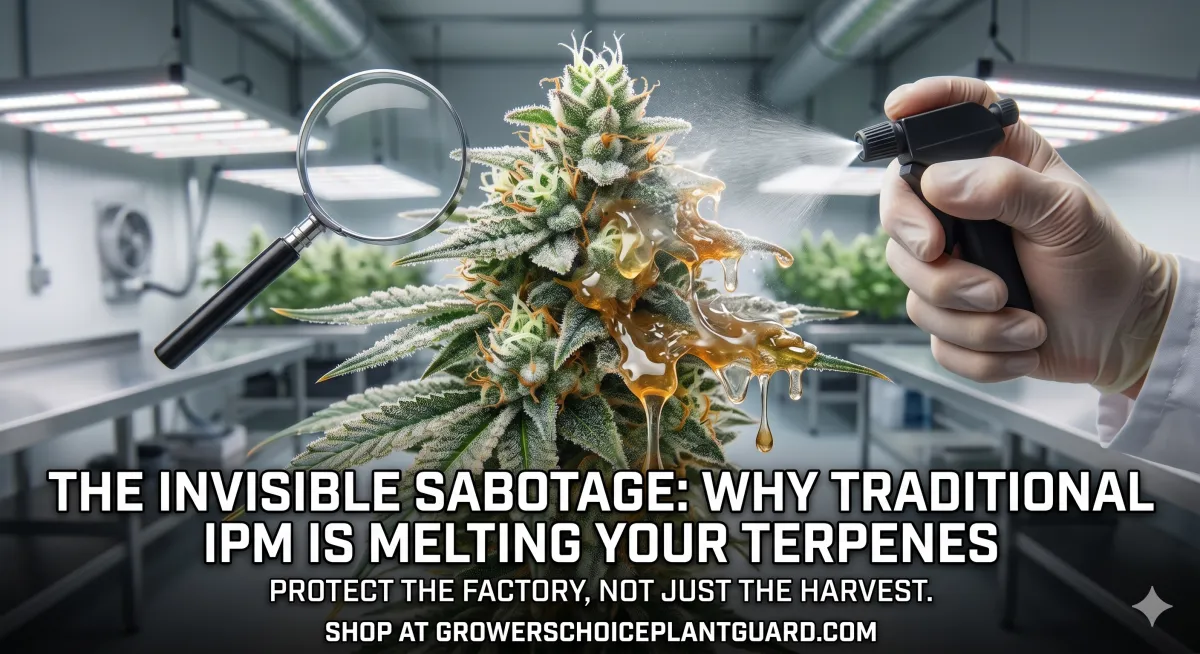
The Invisible Sabotage: Why Traditional IPM is Melting Your Terpenes
Walk into any high-end dispensary or commercial facility, and the first thing that commands attention is the "frost"—that shimmering, crystalline armor of trichomes defining a premium cultivar.
But behind the closed doors of modern drying rooms, a quiet crisis is unfolding. That prize-winning frost is being melted by the very hands trying to save it.
In the high-stakes world of commercial horticulture, professional cultivators have moved far beyond simple biomass. Today, we are chasing the volatile aromatic compounds, complex cannabinoids, and nuanced organoleptic properties that define a top-shelf brand. Yet, our traditional Integrated Pest Management (IPM) protocols—the very tools we rely on to protect our canopy—are acting as the primary agents of their destruction.
🔬 Trichomes Are Factories, Not Just Decoration
To understand why modern harvests are suffering, we must fundamentally reframe how we view the plant’s surface. "Bag appeal" is often discussed as if trichomes were mere aesthetic frosting. In reality, these microscopic glandular structures are the sophisticated biological infrastructure of the plant.
The Cultivation Reality: Trichomes are the actual cellular factories where complex biosynthesis occurs. They produce and house the essential oils, cannabinoids, and terpenes that dictate a cultivar’s market value.
When you view trichomes as biological infrastructure rather than decoration, your responsibility shifts. You aren't just growing a plant; you are managing a delicate chemical manufacturing site. If these structures are compromised, the physical housing for your essential oils is dismantled, bleeding your crop of its value before it ever hits the curing jars.
🧪 The Chemistry of Destruction: Why "Safe" Sprays Dissolve Terpenes
The irony of modern pest and disease management is that the industry’s heavy reliance on "natural" oils and sulfurs represents a systemic failure of chemistry. While marketed as organic and crop-safe, these inputs are fundamentally incompatible with resinous flowers.
Neem Oil: An industry staple that acts as a crude solvent, stripping and dissolving delicate trichome heads on contact.
Wettable Sulfur: An effective fungicide that is notoriously aggressive, burning pistils and leaving a caustic residue that degrades the resinous coating of the flower.
Essential Oil Sprays (Thyme, Rosemary, Peppermint): These are particularly devastating to a high-end harvest.
The Law of Similarity: Like Dissolves Like
Because "like dissolves like," these non-polar, fat-soluble essential oil sprays interact with the non-polar lipids and resins of the trichome as aggressive solvents. They do not merely sit on the surface; they physically dismantle the factory walls, liquefying your harvest's financial and aromatic value the moment they touch the bud.
⏳ The Flowering Trap: The Ultimate Timing Paradox
Traditional crop protection schedules reveal a catastrophic flaw when it comes to late-stage pathogen pressure. Standard compliance and safety protocols typically demand a strict ceasefire exactly when the biological battle intensifies:
Stop using neem oil at least three to four weeks before harvest.
Cease sulfur applications before the transition to the flowering stage.
Avoid essential oil sprays entirely once buds begin to stack.
This creates The Flowering Trap. The final weeks of the generative phase represent the peak of trichome maturation—the critical window where the factory is most productive and the resin is ripening into its final chemical profile.
Paradoxically, this is exactly when pathogen pressure from Botrytis (bud rot) and Powdery Mildew reaches its zenith due to dense microclimates in the canopy. The industry essentially tells growers to drop their shields at the precise moment their specimens are most vulnerable and most valuable.
🚫 The False Choice: Damage the Harvest vs. Lose the Harvest
This paradigm forces professional cultivators into a brutal, binary trade-off that is rarely discussed openly:
Option A: Spray and Protect. Treat the crop to stop pathogens, knowing you are melting your frost, altering the flavor profile, and chemically stripping the flower's character.
Option B: Preserving Trichomes. Put down the sprayer to save the resin, only to watch your entire canopy succumb to a late-stage outbreak days before harvest.
For the commercial operator, this is a lose-lose scenario. There is no pride in a harvest that has been chemically stripped of its organoleptic soul, just as there is no profit in a harvest lost to rot.
🛡️ Enter the "Third Option": Safeguard Your Biomass Without Sacrificing Terpenes
The traditional trade-off between plant protection and product integrity is an artifact of an older era—a time before we fully understood the delicate chemistry of the trichome factory. To scale a commercial cultivation facility today, you can no longer accept the destruction of your frost as the inevitable price of crop security.
You need a solution that offers robust defense against pests and powdery mildew without altering the non-polar lipids of your resin glands.
Stop Melting Your Profits. Upgrade to Advanced Crop Protection.
Protect your "frost," preserve your terpene profiles, and break free from the flowering trap. Equip your facility with a sophisticated biosecurity shield designed specifically for high-value, resin-producing cultivars.
👉 Discover the revolution in advanced plant immunity. Shop the Third Option at growerschoiceplantguard.com.
